Kräftskiva
kräftskiva [ˈkrɛ̂ftˌɧiːva]
“An annual eating and drinking tradition centred around crayfish.”
If you’re not from Sweden, or one of the neighbouring countries, chances are you’ve never heard of a kräftskiva. If you grew up in Sweden, like I did, it’s almost impossible to avoid.
This is an ongoing project about my birthplace — its traditions, rituals, food, and all the wonderful and weird things that make Sweden home.
When I was a kid, we had to bring “a memory” with us to kindergarten from our summer holiday to show what we had been up to. Other kids brought pretty stones they had found, sand from a beach they had visited, or maybe a souvenir from a holiday abroad. I brought a bucket containing a live crayfish. I carefully took it out of the bucket to show the other kids at assembly and, if you haven’t guessed already, my summer memory was a big hit.
Normally, people in Sweden don’t keep crayfish in buckets. We fish them, cook them, and then, with family and friends, throw a party and eat them by the masses. The annual tradition of throwing crayfish parties dates back to the 16th century, when it was popular among the royals, and by the 17th century, crayfish had become available to the broader population. The kräftskiva we know today took shape in the early 1960s and has remained more or less the same ever since.
Kräftskiva season starts in August and runs well into September. Traditionally, a ban on fishing crayfish was in place until the beginning of August each year, and when it was lifted, the party season began.
I have strong memories of late summer nights spent laying out the cages with my grandad and waiting until morning to see whether any of them were filled with crayfish. Sometimes there would be so many that I couldn’t even count them; other times, there would be just one small little one that would have been better off being thrown back into the water.
The crayfish would then be taken out of their cages and placed in water for a couple of hours, so they could, excuse the language, poop out whatever they needed to before they could be prepared for cooking.

What is so special about kräftskiva?
A kräftskiva is always enjoyed with family and friends. The word “–skiva” means a party or gathering, but it comes from the word “bordsskiva”, meaning tabletop, referencing the food and drink shared around a table. Over time, the word became associated with a great or large party where plenty of alcohol would be consumed. This meaning became established in the early 1900s.
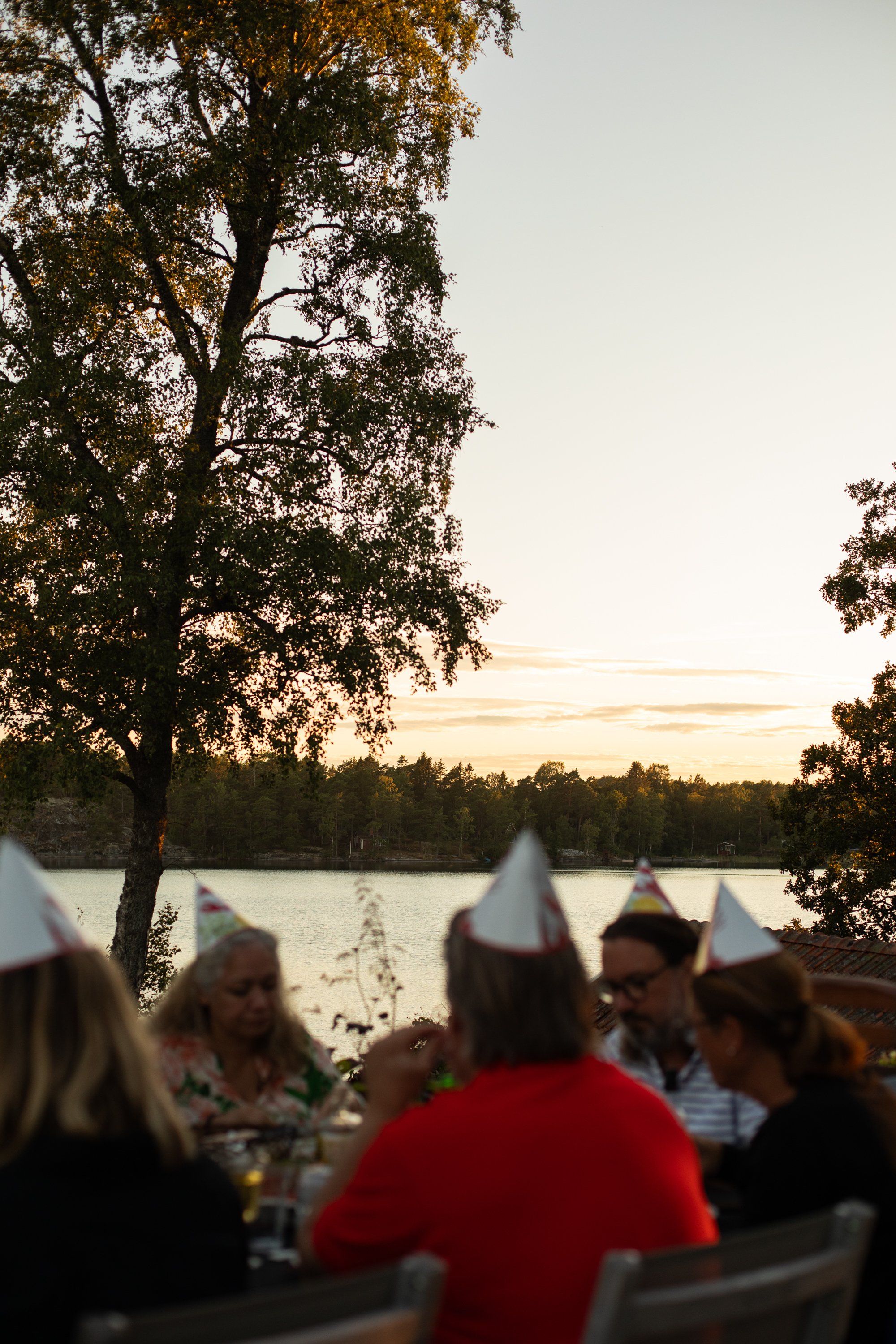
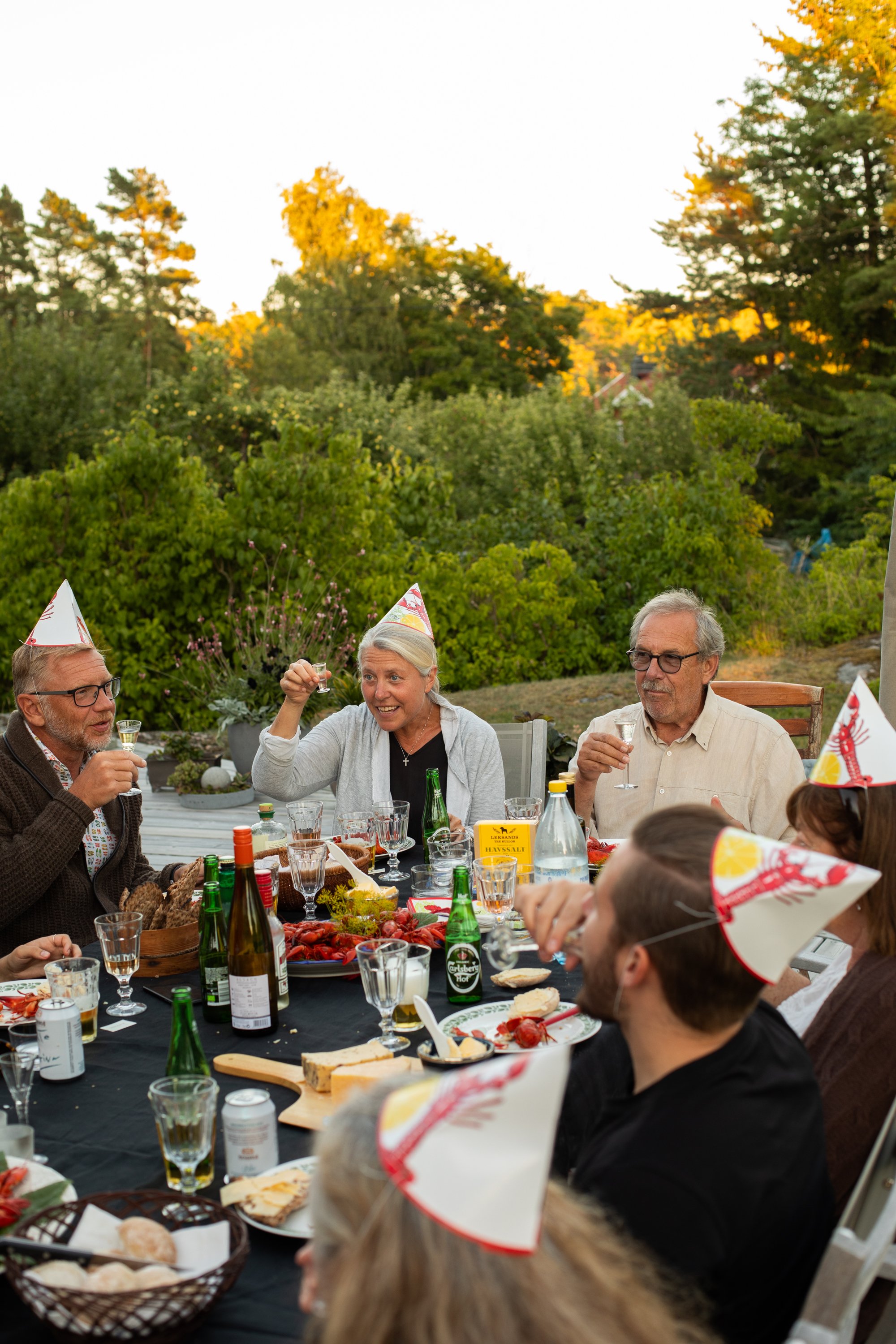
To me, kräftskiva is a way of saying goodbye to summer. It takes place during those last few days of everyone’s holiday, just before returning to everyday life. The warm, late-summer nights, when the sun doesn’t set until late, everyone still has the tan they’ve been working on all summer, and the atmosphere is calm and relaxed. Friends catch up on how they’ve spent their holidays: where they’ve been, what food they’ve eaten, and what they’re looking forward to as they return to the cities.
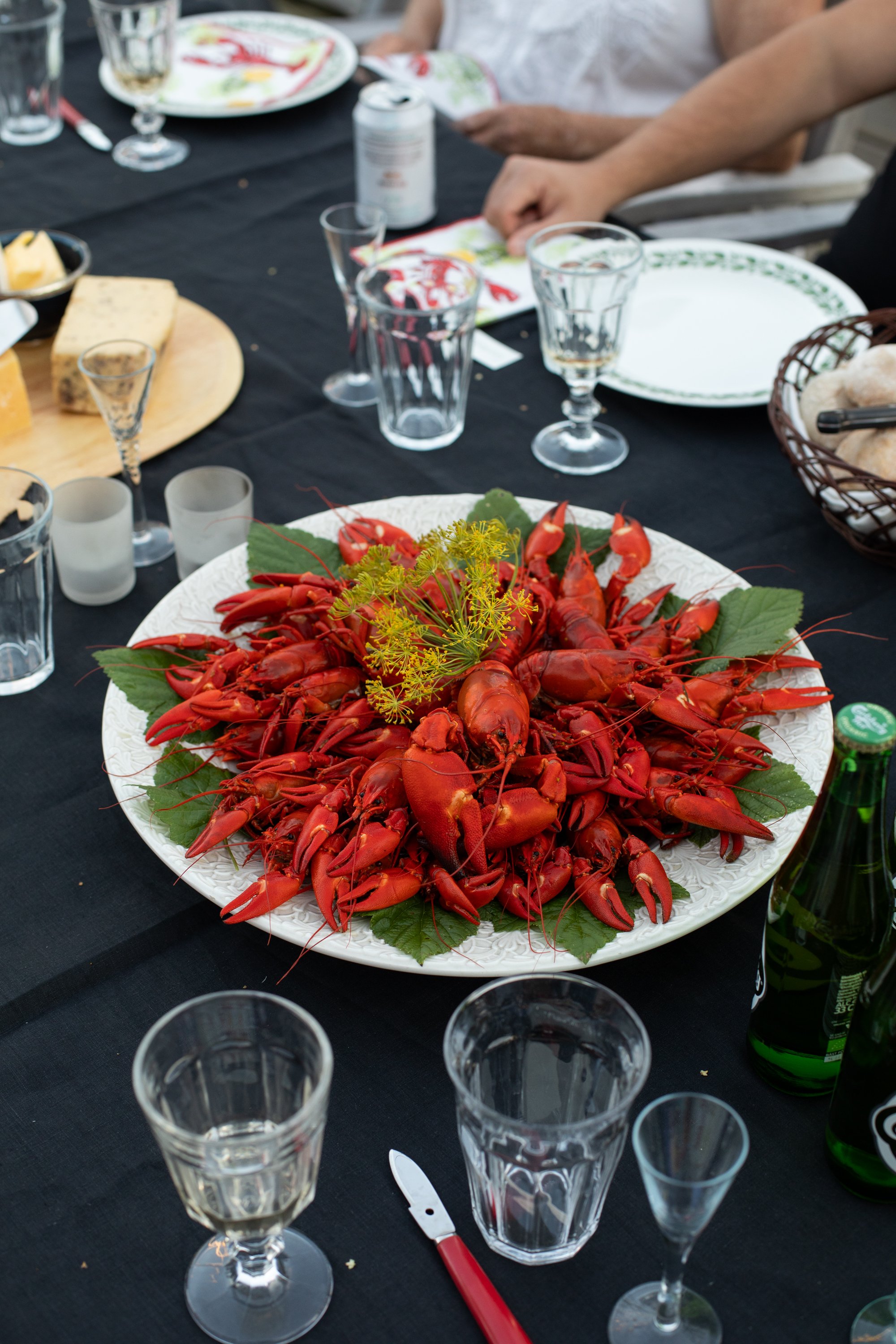
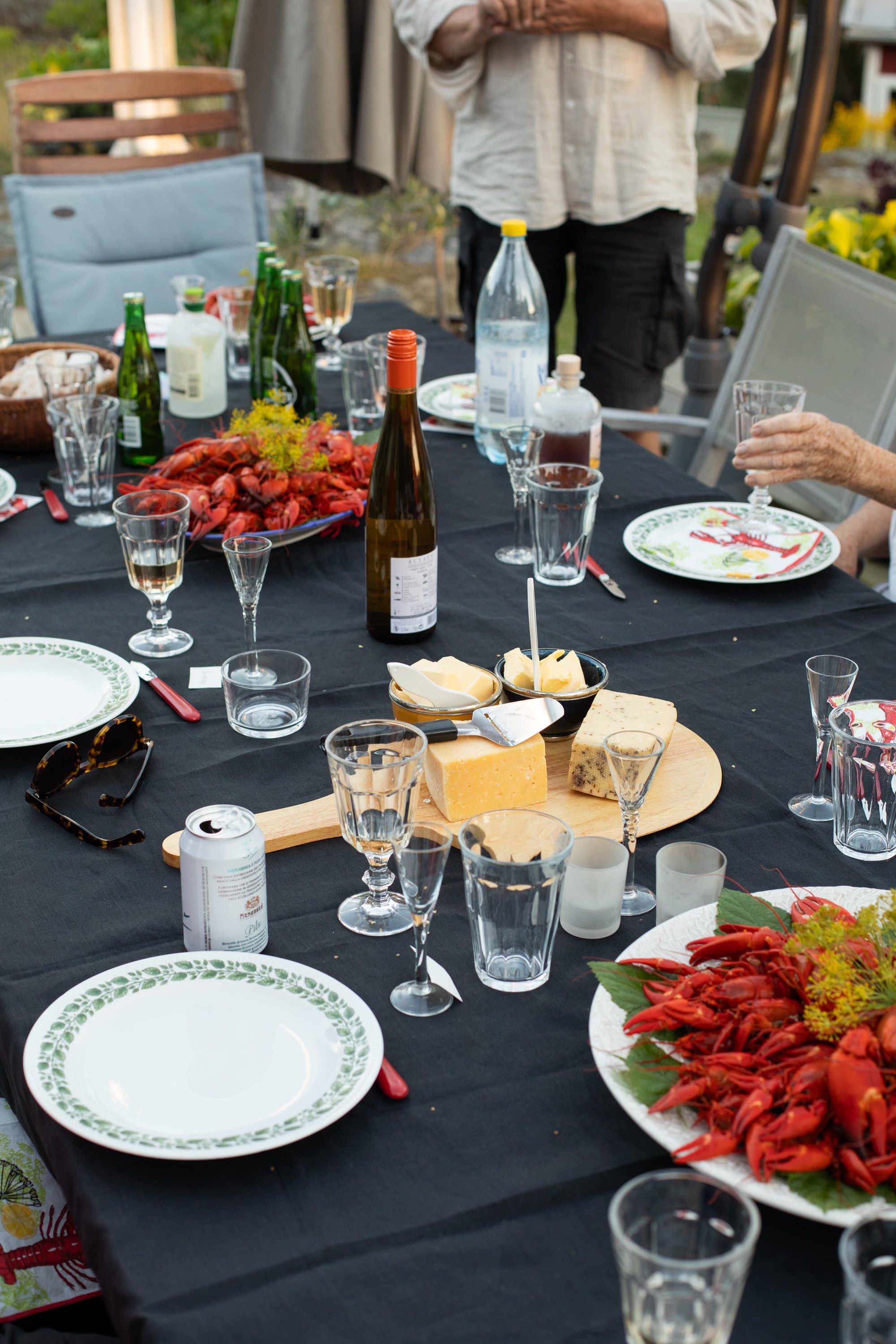
Large trays of crayfish are placed in the middle of the table and party hats are handed out. There are bottles of “snaps”, a spirit traditionally flavoured with caraway seeds, and songbooks for everyone to share. Between eating and slurping crayfish, everyone sings songs together, followed by a shot of snaps. This continues throughout the evening, with the singing, drinking and eating becoming almost inseparable from one another.
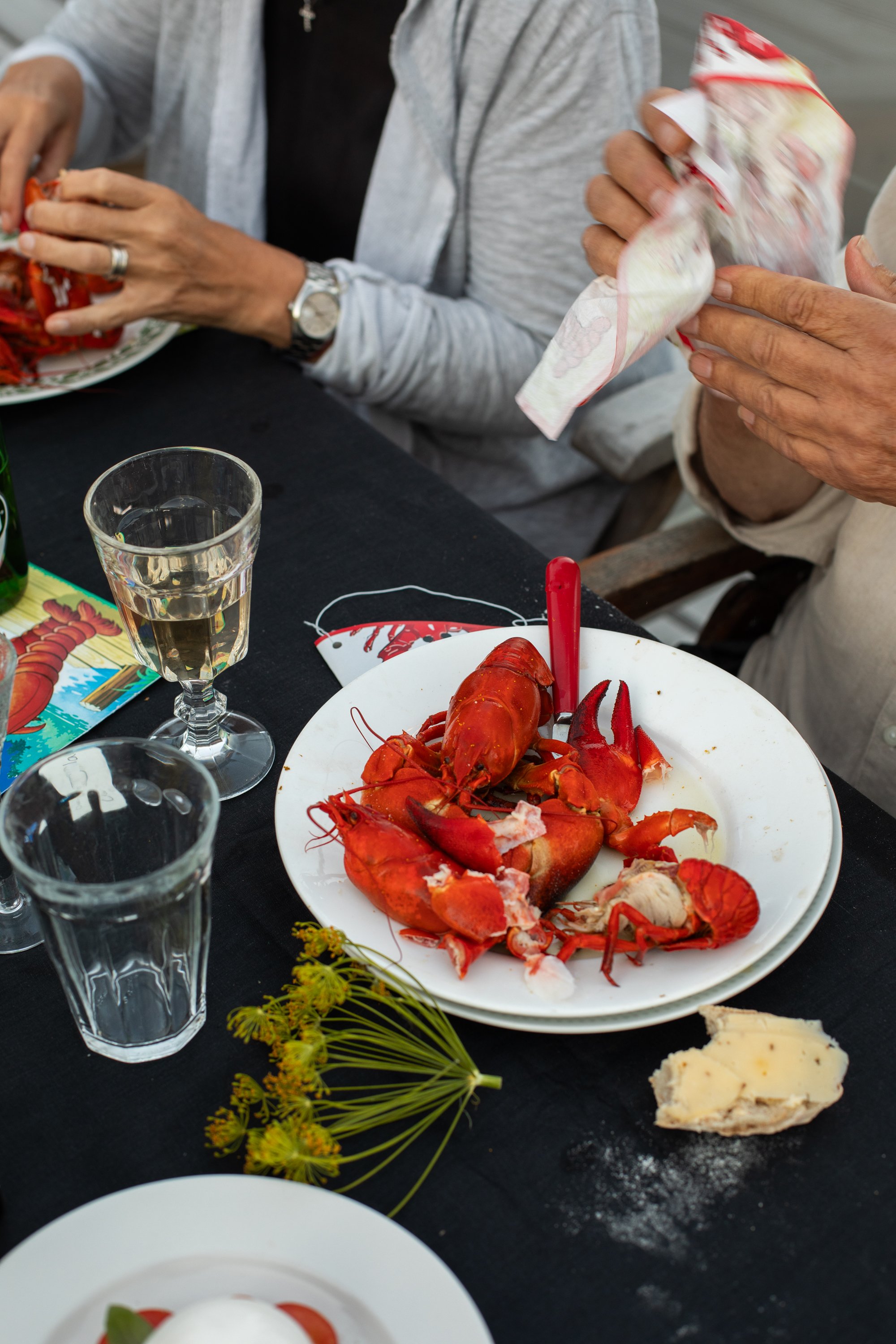
There is typically a certain order to eating crayfish. You start by sucking out the juices the crayfish was cooked in. Then you take the crayfish and, just underneath the head, lift the “lid” and remove the head — we don’t eat the head. Using a special crayfish knife, you scrape out the inside and bite into the filling. The claws are cracked open with special tongs and eaten as well.
Beer is the main drink alongside the snaps, and between the crayfish, songs, drinking and conversation, the evening carries on well into the late summer night.